
Suitable for those who have no prior experience of Python or programming, this course will hand-hold you to an intermediate level of expertise beginning with the basics of programming in Python.
At the end of this course, you will need to attempt the Python Programming Associate (PyA) certification, and upon successfully passing the exam, the PyA designation will be bestowed on you. -Learn to solve real world problems-Use statistics in Python...
The PMP Exam Content Outline has Changed!
Published by Savio on July 1, 2019. Updated September 1, 2019.
If you haven't heard, PMI recently announced that the PMP exam will be changing in July 2020. And now the exact changes have been published. Continue reading to know more about these changes.
The domains have been rejigged. Once the new outline comes into effect July 1, 2020, the PMP exam will include questions that test the following domains:
1. People
2. Process
3. Business Environment
Clearly, the focus of the exam has now evolved to recognize the fact that a good and reliable project manager is process-centric as well as people-centric. The PMP exam will now test the propspective certification aspirant in the following proportions:
| Domain | Percentage of Items on Test |
| I. People | 42% |
| II. Process | 50% |
| III. Business Environment | 8% |
| Total | 100% |
VERY IMPORTANT:
About half of the examination will represent predictive project management approaches and the other half will represent agile or hybrid approaches, across the three domains.
People |
| Task 1 Manage conflict |
| Task 2 Lead a team |
| Task 3 Support team performance |
| Task 4 Empower team members and stakeholders |
| Task 5 Ensure team members/stakeholders are adequately trained |
| Task 6 Build a team |
| Task 7 Address and remove impediments, obstacles, and blockers for the team |
| Task 8 Negotiate project agreements |
| Task 9 Collaborate with stakeholders |
| Task 10 Build shared understanding |
| Task 11 Engage and support virtual teams |
| Task 12 Define team ground rules |
| Task 13 Mentor relevant stakeholders |
| Task 14 Promote team performance through the application of emotional intelligence |
Process |
| Task 1 Execute project with the urgency required to deliver business value |
| Task 2 Manage communications |
| Task 3 Assess and manage risks |
| Task 4 Engage stakeholders |
| Task 5 Plan and manage budget and resources |
| Task 6 Plan and manage schedule |
| Task 7 Plan and manage quality of products/deliverables |
| Task 8 Plan and manage scope |
| Task 9 Integrate project planning activities |
| Task 10 Manage project changes |
| Task 11 Plan and manage procurement |
| Task 12 Manage project artifacts |
| Task 13 Determine appropriate project methodology/methods and practices |
| Task 14 Establish project governance structure |
| Task 15 Manage project issues |
| Task 16 Ensure knowledge transfer for project continuity |
| Task 17 Plan and manage project/phase closure or transitions |
Business Environment |
| Task 1 Plan and manage project compliance |
| Task 2 Evaluate and deliver project benefits and value |
| Task 3 Evaluate and address external business environment changes for impact on scope |
| Task 4 Support organizational change |
If you've found this article useful and need assistance in alinging your content to the revised outline, please write to us at savio@repsupport.org or click the link below.

The link to the Exam Content Outline on PMI's website is here:
https://www.pmi.org/-/media/pmi/documents/public/pdf/certifications/pmp-examination-content-outline-june-2019.pdf
Brought to you by the helpful folks at REP Support by


Grow your business with:
Google Advert
Clients
Pinnacle Professional Development, USA

*Logos are properties of their respective owners.
True Solutions Inc, USA
*Logos are properties of their respective owners.
Red Rock Research, USA
*Logos are properties of their respective owners.
Global Lynx, USA

*Logos are properties of their respective owners.
Université de Sherbrooke, Canada

*Logos are properties of their respective owners.
Know more about REP Support by SAVIO:
REP Support was founded in 2017 by Prof. Savio Saldanha, with the aim of assisting education providers deliver the best training and content to their participants, and also help them grow their businesses. Since then, REP Support has helped numerous education providers across the globe, ranging from large universities to smaller institutes, with a 100% satisfaction rate.
-> Know more about REP Support.
-> Know more about Savio.
-> Know more about REP Support.
-> Know more about Savio.
Current Offerings for Education Providers
-

-
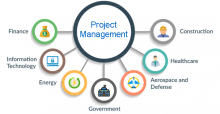 PMP Refresher Training for those who have already completed their 35-hour PMP training but have not attempted / passed the PMP exam.REPs choose to offer refresher courses to their participants who may wish to pursue the PMP certification after a gap in their training:Includes:- 15 hours of LIVE training- Post training guidance, and hand-holding for 1 month- PMI PMP application assistance- FREE enrollment in up to two future PMP refresher course...
 -
 REP Support currently offers online PMP preparation solutions. Order seat(s) online by clicking the 'Order Now' button below.REP accounts will be activated within 24 hours of purchase, after which participant accounts can be immediately activated by the REP. Features:- Increasing discounts for subsequent purchases above 25 participants- Lifetime seat purchase validity. Seats purchased for the particpants will not expire until they are...